
|
The once bare brick walls inside historic ACCI Gallery on Shattuck Avenue have come alive this March to commemorate Women’s History Month with a vibrant metaphorical tapestry woven by many of the women who were instrumental in the gallery’s history. Erda LaBuhn, ACCI’s very first president, helped set ACCI’s loom in motion through her vision and leadership, beginning the process that would enable those who followed to succeed and thrive. Catherine Webb’s talents as a woodworker became an important asset in the gallery’s first steps of establishing a home. As different pieces of wood are often joined together to create a unified structure, Webb used her keen observation skills in finding the building in which we could build a strong, lasting legacy. Her dedication extended beyond ACCI, as she mentored fellow member Veola Wilson, whose innovative spirit blossomed into an award-winning invention of a unique jewelry box; a testament to the power of nurturing. Kay Sekimachi stands as a pioneer, resurrecting the art of fiber and weaving and being anointed as a “weaver’s weaver,” adding a previously under-represented texture to the artistic tapestry. Using the loom to construct three-dimensional forms, Sekimachi’s sculptural pieces are exploratory forms utilizing movement, space, and transparency. Through her dedication to children's art classes at ACCI, Susan Cerny, ensured the threads of creativity would continue to be spun by future generations. Multi-talented, her artwork started as oil-on-wood floral art pieces, but segued into ceramics, and her local historic preservation endeavors earned her recognition as an "Outstanding Berkeley Woman;" a well-deserved accolade. These are but a few of the brilliant strands woven into the fabric of ACCI. Another clay artist who left a mark on ACCI and Berkeley is Martha Nickoloff, who co-authored the neighborhood preservation ordinance, led the creation of Ohlone Park, and who championed the very space where our artistic expression thrives. Susan Felix, both a pit fire ceramist and Berkeley's Art Ambassador, has had her ritual-themed work displayed by some of the most prestigious collections in the world; from the Museum of Contemporary Crafts in New York to Christie’s in London, England, with numerous solo exhibitions all over the country. These women, and countless others, are the weft and warp of ACCI's story. They are the vibrant colors and intricate patterns that make our artistic tapestry unique and enduring. Their contributions, like the brushstrokes on a masterpiece, have not only enriched the gallery but also left a lasting impact on the cultural fabric of Berkeley. As we celebrate Women's History Month, let their stories continue to inspire, reminding us of the power of collaboration, mentorship, and the enduring legacy woven by remarkable women. Article by ACCI Artist Carolyn Tillie and Kirk McCarthy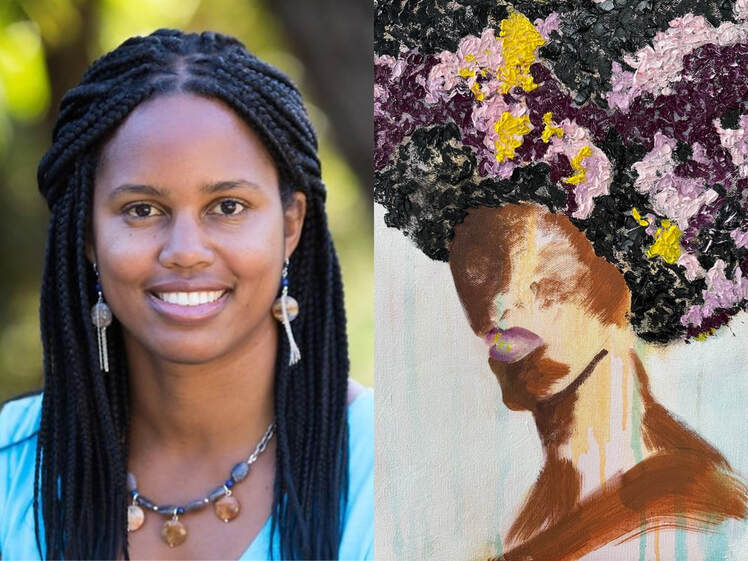 Don't miss this article in the Berkeleyside with ACCI Artist, Julie Atkinson, on her career path, artistic process and why she chooses to highlight natural hair in her work.
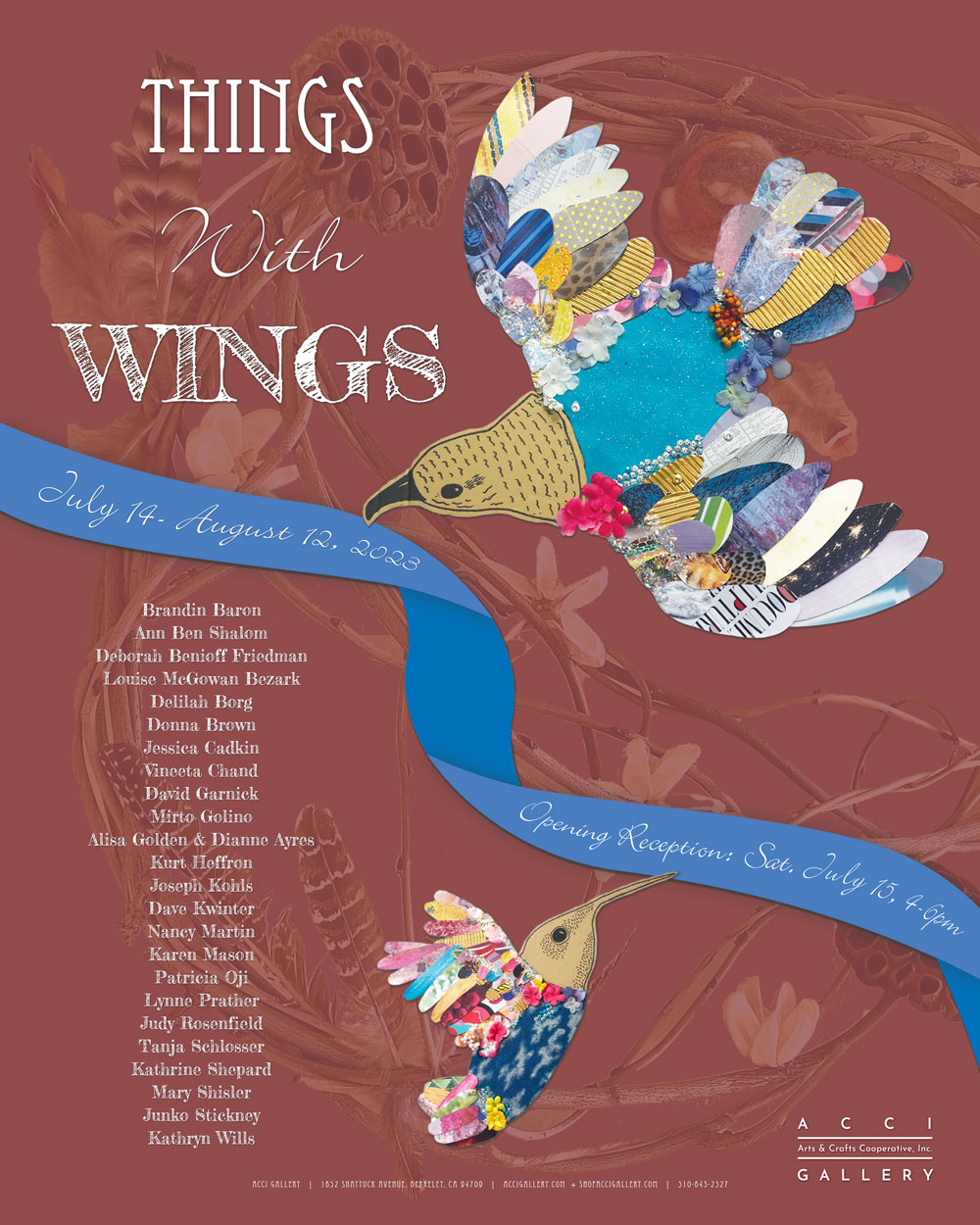
 Photo from the exhibition by Hillary Johnson 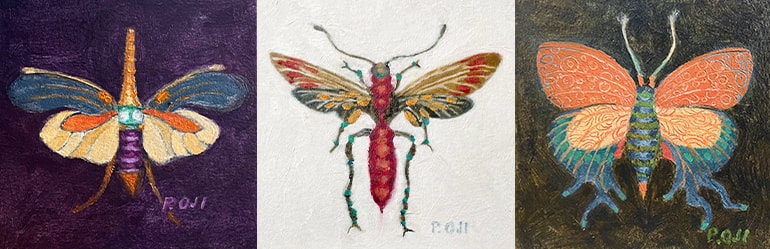 “Hope” is the thing with feathers
By Emily Dickinson “Hope” is the thing with feathers - That perches in the soul - And sings the tune without the words - And never stops - at all - And sweetest - in the Gale - is heard - And sore must be the storm - That could abash the little Bird That kept so many warm - I’ve heard it in the chillest land - And on the strangest Sea - Yet - never - in Extremity, It asked a crumb - of me. Is “Hope” a thing with “Wings”? There is much angst, fear, injustice, violence, and oppression in the world right now. "Things with Wings" is intended to be a light, uplifting (wings!!!) fanciful show- a brief segue into a vision of creative wonder. The call is for fantastical creatures and constructions that depict or hint at the possibility of flight. Well observed or interpreted winged things in the natural world are also welcome. We will be looking for beautifully rendered or constructed creations with an emphasis on originality and playfulness. Deadline to apply: Friday, May 19 |
Archives
March 2024
|

 RSS Feed